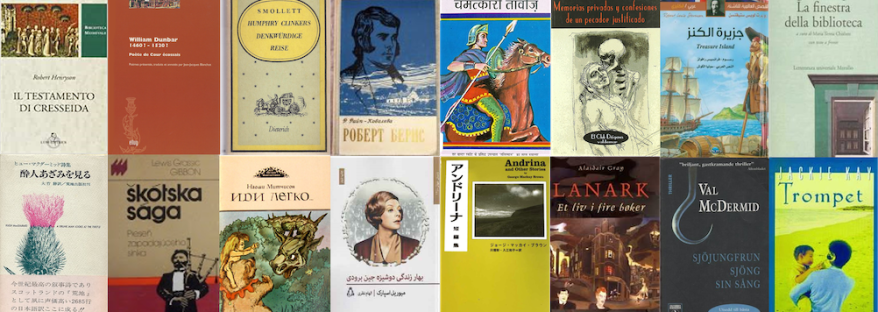
Kirsten Stirling, Corey Gibson and Marie Hedon are inviting everybody interested to the CIVIS Scottish literature Spring Webinar on the “Outreach of Scottish Literature”, held on 12 March 2026 at 5-6pm GMT / 18-19h CET. The theme for this webinar is contemporary literature in translation.
Please register here, a zoom link will be sent before the event.
Speakers:
John Corbett, Professor of English at Beijing Normal-Hong Kong Baptist University (BNBU) : As Others See Us: Scottish Literature in and out of Translation
It is now recognized that the translation of poetry, fiction and drama into the literatures of Scotland has played a major formative role on the development of Scottish literature. It is increasingly obvious that the translation of Scottish literatures into other languages changes them in unexpected, contradictory, and telling ways. A comparative literary perspective on the literatures of Scotland changes how we read them, and how we study them. This talk will focus on a few examples of translations into and out of the literatures of Scotland to illustrate the impact of Scottish literature on the ecosystems of other cultures, and to show how entry into those ecosystems gives new insights into Scottish literary studies.
Paul Barnaby, Acquisition and Scottish Literary Collections Curator, University of Edinburgh : The Birth of BOSLIT: Setting up a Database of Scottish Literature in Translation
This talk will discuss the establishment and first phase of the BOSLIT (Bibliography of Scottish Literature in Translation) project, on which I worked as bibliographer/researcher from 1994 to 1999. It will address the following questions. Whose needs was the BOSLIT database intended to serve? How was it designed and made available? What cataloguing conventions did we employ? How did we compile a search-list of Scottish writers? How did we define ‘Scottishness’ and ‘literature’? How did we locate translations? What different strategies die we use to find monographs and individual pieces (poems, short stories, essays) published in periodicals or anthologies. How did we overcome language barriers? What kind of gaps were there in our coverage? How did the aims and strategies of the project change in light of often surprising research results? The talk will also briefly discuss the evolution of BOSLIT in the early years of the present century and the recent successful attempt to rescue and relaunch the database at Glasgow University.
If you missed the Autumn webinar and/or are interested in its topic, “Poetry and Public Life in Scotland”, the video is available here.
IASSL is pleased to invite everybody interested to the next instalment of the webinar series ‘Environmental Scotland’, to be held on Monday 20 April 2026 at 5 pm UK time on ZOOM. The event will feature two talks, by Garry MacKenzie and Coinneach Maclean, and will be followed by a discussion. The series is currently facilitated by Monika Szuba (University of Gdańsk) and Petra Johana Poncarová (Charles University, Prague).
Garry MacKenzie: In this talk I will reflect on my approach to writing about two Scottish landscapes: Ben Dorain, in the West Highlands, and the Firth of Forth. Ben Dorain is the location of one of the greatest poems in Scottish Gaelic, Duncan Ban MacIntyre’s In Praise of Ben Dorain, composed orally in the eighteenth century. I will discuss how I translated this poem and incorporated it into a longer ecopoetic exploration of Highland ecology and contemporary environmental philosophy. I will then outline some of the ways in which I’ve been creating a new, poetic portrait of the ecological and social history of the Firth of Forth, drawing on glaciology, marine ecology, social history and recent environmental concerns including plastic pollution. I will conclude by considering how distinctly Scottish places and literary traditions might be brought into conversation with global environmental issues and contemporary ways of thinking about the world we live in.
Coinneach Maclean: Tourism in Scotland has a powerful marketing brand, the kilted Highlander in a mountain landscape. Literary discourse views this image as false, distorting and displacing a more authentic image of the nation. The pervasiveness of this discourse substitutes for a reasoned examination of the impact of mass tourism on the landscape and culture of Gaelic Scotland. This paper looks in more detail at the current tourism narratives of ‘wilderness’, the conjuring of new meaning for ancient place-names, the construction of new narratives based on such musing, the failure to understand the nature of older landscape narrative, and finally considers the context for the ‘academic’ positioning of Scotland as the prime site of the ‘Invention of Tradition’.
ABOUT THE SPEAKERS
Garry MacKenzie is a poet and non-fiction writer based in Fife. His book-length poem Ben Dorain: a conversation with a mountain(2021) is published by The Irish Pages Press. Combining a free translation of Duncan Ban MacIntyre’s eighteenth-century Gaelic poem In Praise of Ben Dorain with original material on themes including ecological science and the politics of land use, Ben Dorain was shortlisted for a Scottish National Book Award. His non-fiction book Scotland: a Literary Guide for Travellerswas published by I.B. Tauris in 2016. Garry has also published three pamphlets with Clutag Press and Wind&Bones, collaborated with visual artists and filmmakers, and had his work adapted for BBC radio. He teaches literature and creative writing on a freelance basis and is an Associate Lecturer (lifelong learning) at the University of St Andrews. His next collection Firth, a poetic portrait of the Firth of Forth, will be published in early summer 2026.
Coinneach Maclean is from the island of South Uist and is now retired from full-time employment and trusteeships. Although he initially trained as an archaeologist at Edinburgh and Cambridge universities, he has had a diverse career latterly as a qualified tourist guide. This field has provided further insight into the treatment of indigenous cultures at the hands of the mass tourism industry. Coinneach has successfully defended a doctoral thesis entitled ‘The Tourist Gaze on Gaelic Scotland’ and authored two books in 2025: Travels in Another Country, a guide to Gaelic Scotland and An t-Eilean, Skye Places and People.
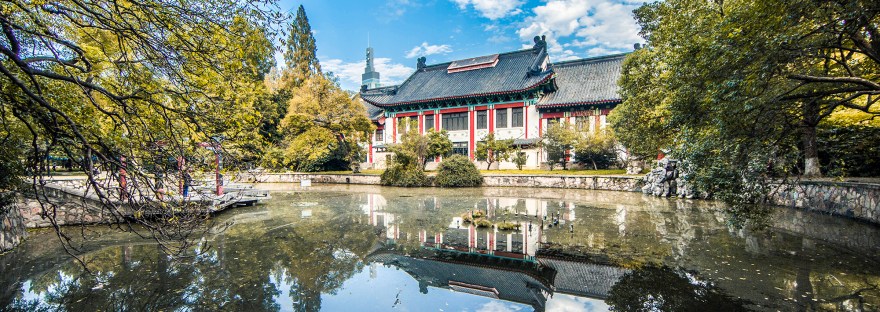
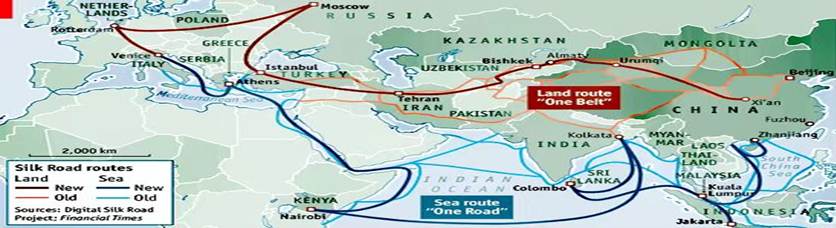
The Fifth World Congress of Scottish Literatures will be held at Nanjing Normal University in Nanjing, China, on 17-20 June 2027. Being China’s first city designated as a “UNESCO City of Literature”, Nanjing—the venue for this congress—is not only a time-honored ancient capital of six dynasties but also boasts a millennia-old literary heritage. The main theme of this congress, “Scotland Along the New Silk Road”, underscores the dynamic interplay between Scottish literature with the diverse literary landscapes along this transcontinental bridge of cultural exchanges.
In ancient times, the Silk Road served as a historic trade route connecting East and West, fostering economic and cultural communications across continents. Today, the New Silk Road has evolved into a global network spanning Asia-Pacific, Africa, and Europe, acting as a dynamic bridge for economic collaboration and cross-cultural dialogue in an interconnected world. For Scotland, this initiative indicates a two-way exchange: Scottish literature is increasingly translated and published in New Silk Road countries, while Scotland’s own cultural narrative is enriched through deep engagement with these regions’ literary traditions. By situating Scottish literature within this transcontinental framework, this congress seeks to foster reciprocal understanding and cultural collaborations between Scotland and the diverse voices of the New Silk Road.
In light of this, the Steering Committee welcomes proposals for papers that explore these or any of the following themes in relation to Scotland’s literatures (suggested but not restricted to the following):
Imagining “the Orient” in Scottish Literature
Scottish Writers Writing from Asia
The Reception of Scottish Writers and Culture in Asia
The Reception of Chinese Material and Intellectual Culture in Scotland
Folk Traditions in Transcultural Contexts: Scotland and Eurasian Cultural Exchanges
Whisky and Tea: Material Culture Exchanges Along the Maritime Silk Road
Eco-Writings in the Anthropocene: Scotland, Silk Road and Beyond
Aesthetics and Literature in the Scottish Enlightenment
Nineteenth-Century Scottish Literature
Rethinking Canonical Scottish Writers
Contemporary Scottish Literature and World Literature
We welcome more topics about Scottish literature, and we also welcome pre-organized panels. In keeping with the conference’s focus on dialogue and in order to maximize discussion and participation, panel organizers are encouraged to explore alternatives to the traditional format of three to four papers, such as workshops or roundtables.
Please note that in the interest of involving as many people as possible, participants are asked to present only one paper at the congress; however, they may also serve on a roundtable/discussion or as a discussant. Papers in English, Scots, Gaelic, Chinese and indigenous languages are welcomed. The working languages for this congress are English and Chinese. For speeches delivered in languages other than English, we recommend preparing English translations in advance either in paper or in PowerPoint.
Please note that the deadline for ALL proposal submissions is 30 November 2026.
Proposals for papers should include an abstract of c. 200 words, including affiliation.
Please fill in the following form and send it to this Congress’s email address: nj2027iassl@126.com
Name
Nationality
Gender
Passport
Passport No.:
Issue Date: Expiration Date:
School, Institute, Nation
Email
Title of the Paper
Abstract:
All participants must be members of the International Association for the Study of Scottish Literatures (IASSL) at the time of the Congress (please contact scotlit-iassl@glasgow.ac.uk for further details or follow instructions how to join).
2027 IASSL Nanjing World Congress Advisory Committee (in alphabetical order of surnames):
Professor Gerard Carruthers (University of Glasgow)
Professor John Corbett (Beijing Normal-Hongkong Baptist University)
Professor Leith Davis (Simon Fraser University, Vancouver)
Professor Ron Dunbar (University of Edinburgh)
Professor Ning He (Nanjing University)
Professor Marie-Odile Hedon (Aix-Marseille University)
Professor Steve Newman (Temple University)
Professor Murray Pittock (University of Glasgow)
Professor Jian Zhang (Beijing Foreign Studies University)
Accommodation
Recommended hotels in the vicinity of the campus
Nanjing Grand Hotel (near campus): ¥450/day (about £47/day), Address: 208 Guangzhou Road, Gulou District, Nanjing, Jiangsu, China
Nanshan Zhuanjialou Hotel (on campus): ¥350/day (about £36/day), Address: 122 Ninghai Road, Gulou District, Nanjing, Jiangsu, China
Please note that the hotel prices listed above are based on the current exchange rate and contract price, which might be subject to change. Booking information will be provided in due course.
Registration Fee:
Attendance for full conference Standard rate (Academic/Waged): ¥1,500(about £155)
Attendance for full conference Standard rate (Student): ¥800 (about £83)
The registration fee covers conference attendance on 17-20 June 2027 and related events including the pre-conference reception, lunches and dinners during the conference.
Conference Venue: Suiyuan Campus of Nanjing Normal University, No.122, Ninghai Road, Nanjing, Jiangsu, P.R.China, 210097
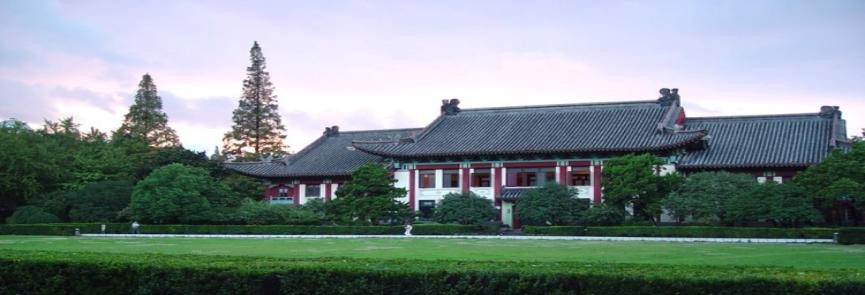
An Introduction to the Conference Venue: Located in Nanjing, the ancient capital of six dynasties in Chinese history, Nanjing Normal University (NNU) is one of the key Chinese institutions of higher education. Its origin can be traced back to 1902 with the establishment of Sanjiang Normal College, as one of the cradles of China’s higher normal schools. The Suiyuan Campus is the old campus of Nanjing Normal University, renowned as “the most beautiful campus of the Orient”. It was once the private garden of Yuan Mei, a literary figure in the Qing Dynasty, and also served as the prototype for the Grand View Garden in A Dream of Red Mansions, one of the Four Great Classical Novels of Chinese literature.
This conference is primarily hosted by the Scottish Studies Center under the School of Foreign Languages and Cultures at Nanjing Normal University. As a major Scotland research institution in China, this center is committed to promoting cultural exchanges between Scotland and China, as well as conducting specialized or interdisciplinary research on various aspects of Scotland. In September 2021, the Scottish Studies Center co-hosted the International Scottish Literature Conference with the University of Glasgow. This event invited over a dozen renowned scholars from China, the UK, Italy, and other countries, receiving widespread positive feedback. At the Fifth World Congress of Scottish Literatures, the Scottish Studies Center of NNU will further facilitate exchanges and communications between Scottish literature and the literary cultures along the New Silk Road.
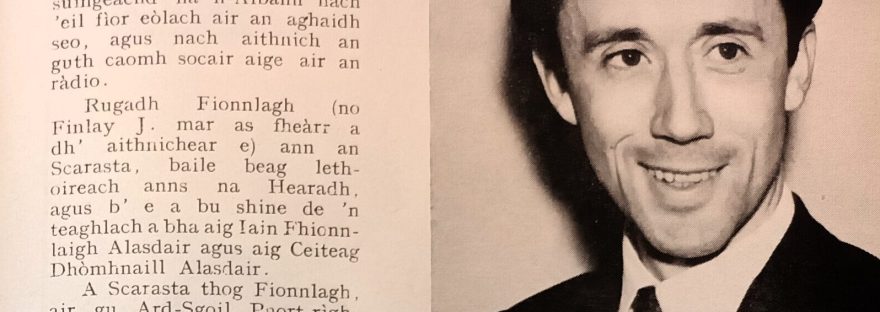
This year marks the centenary of the birth of Fionnlagh Iain MacDhòmhnaill | Finlay J. Macdonald (1925–1987). The webinar explores his rich legacy as a filmmaker and producer, writer, journalist, editor, and a leading figure in Gaelic initiatives and Scottish media. The four ten-minute presentations will be preceded by a short introduction about Macdonald’s life and career and followed by a general discussion. The event will be conducted in English with some readings in Gaelic. Bidh fàilte bhlàth romhaibh uile / All welcome!
PROGRAMME
Mhairi Brennan (Aston University): Finlay J Macdonald is perhaps best remembered for his memoirs, but less well known are the documentaries he made for BBC Scotland in the 1960s. This talk will introduce you to his documentary work, exploring the poetry he found in all walks of life across Scotland.
Petra Johana Poncarová (Charles University, Prague): The talk will focus on Macdonald’s work in drama, from making radio adaptations, producing Gaelic plays, and translating new works into Gaelic to supporting the development of Gaelic drama through festivals and writing on drama and related topics for the magazine Gairm.
SPEAKERS
Mhairi Brennan is a writer, researcher, and lecturer in Television Studies. Her first book, Archiving the Referendum: BBC Scotland’s Television Archive and the 2014 Scottish Independence Referendum, will be published by Palgrave Macmillan later this year.
Rob Dunbar holds the Chair of Celtic at the University of Edinburgh. His research focuses on language policy and planning, on Gaelic literature, culture and society from the late eighteenth to the early twentieth century, and on Gaelic in Canada. He is currently working on Gaelic autobiographical writing and Gaelic humour, as well as a completion of a biography and literary assessment of the Tiree/Nova Scotian poet John Maclean (1787-1848), and a scholarly edition of his secular song-poems.
Tòmas MacAilpein is based in Glasgow and works for Faclair na Gàidhlig. Recently, he became the editor of the Gaelic literary magazine STEALL. He was the co-editor, with Roibeard Ó Maolalaigh, of Gairm: Ùghdar is Dealbh, Rosg is Rann, 1952–2002. His own research focuses on Gaelic literature and history of the Gael, especially in the 19th and 20th century.
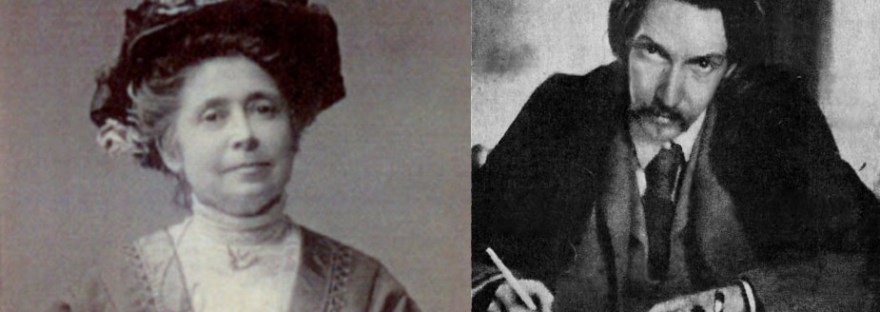
Meehyun Chung and L. M. Ratnapalan, ‘Lilias Horton Underwood’s Korean translations of Robert Louis Stevenson’
In 1921, Lilias Horton Underwood (1851–1921) published the earliest known Korean translation of Robert Louis Stevenson’s Strange Case of Dr. Jekyll and Mr. Hyde. She also translated Stevenson’s short story ‘The Bottle Imp’. Lilias was the wife of Horace Grant Underwood (1859–1916), an Anglo-American Presbyterian missionary and one of the founders of Yonsei University. The Underwoods were educators who believed in spreading the gospel through the printed word. Stevenson’s fiction, particularly Jekyll and Hyde, may seem like an unusual choice for missionary work given its dark and violent themes, but many missionaries at the time saw the story as reflecting Christian ideas about morality and redemption. In this presentation, we examine how Lilias Underwood translated Stevenson’s complex and symbolic language, the role her Korean assistant Tae-won Park (박태원) may have played in the process, and what these translations reveal about the global reception of Stevenson.
Paul Tonks and John M. Frankl, ‘Modern Korean Engagements with Scottish Writers: Exploring the Literary and Intellectual History of Korean-Scottish Relations’
The literary and intellectual relationships between Scotland and Korea have developed considerably in recent years. In 2019, for example, the Scottish Centre for Korean Studies was established at the University of Edinburgh. Many Scots are interested in Korean culture, both academics and the general public. Engagements between Scottish and Korean writers extend back into the late 19th and early 20th Centuries, however, during Korea’s ‘opening’ to Western nations during the ‘Gaehwa’ period. Scottish Enlightenment political economy and conjectural history/stadial theory were of major interest to Koreans in a time of huge transformations in East Asia. Christianity also made a significant impact due to the influence of missionaries, especially on education. Our paper connects these trends by examining the impact of Scottish writers in Korea from the late Chosun era, through the colonial period, and down to the present.
Chair:
Hyungji Park is Professor of English literature in the Department of English Language and Literature at Yonsei University. She is the co-author of Imperialism and Masculinity: Gender Formation in Nineteenth Century Britain, and has published recently in Wasafiri, Victorian Studies, Inter-Asia Cultural Studies, Victorian Literature and Culture, and numerous other journals. She has held multiple senior administrative positions at Yonsei University, including serving as a founding member of Underwood International College (UIC) from 2004 and as UIC’s Dean from 2012 to 2016. Her primary fields of research and teaching include Victorian literature, Korean popular culture, Asian American literature, and contemporary fiction, with a focus on post-colonial and gender issues. Her recent research is clustered around methodological approaches of “locatedness” (i.e., doing English in Asia).
Speakers:
Meehyun Chung is Professor of Systematic Theology in the United Graduate School of Theology at Yonsei University, a Reverend of the Presbyterian Church in the Republic of Korea (PROK), and Dean of the university Chaplaincy. She is also the Director of Yonsei’s Centre for Justice, Peace and Integrity of Creation and the moderator of the Commission for Ecumenical Education and Formation (EEF) of the World Council of Churches. She has published numerous books and articles on Reformed Theology with gender awareness and ecotheology. In 2006 she was awarded the Karl-Barth prize of the Union of Protestant Churches within the EKD (Evangelische Kirche in Deutschland) for her doctoral thesis on Karl Barth, Josef Lukl Hromadka and Korea and also for her other research. She received the Marga Bührig Award in 2013 and was named one of ten key Reformed theologians by the World Communion of Reformed Churches (WCRC) in 2017.
L. Michael Ratnapalan is Professor of History at Underwood International College, Yonsei University. He specializes in modern British history with a focus on the history of empire, religion, and missions. He is the author of Robert Louis Stevenson and the Pacific: The Transformation of Global Christianity (Edinburgh University Press, 2023). His research has appeared in a wide range of historical and literary journals including Scottish Literary Review, Religion and Literature, Historical Journal, Journal of Pacific History, Journal of Religious History,and Journal of Imperial and Commonwealth History. He is under contract to write a biography of Robert Louis Stevenson for Oxford University Press.
John M. Frankl is Professor of Korean and Comparative Literature at Underwood International College, Yonsei University. He specializes in modern Korean literature and has worked extensively on representations of ‘the foreign’ in Korean literature, culminating in a Korean-language monograph on the subject in 2008. His primary specialization over the last decade has been on the fiction and essays of the Japanese Colonial Period (1910-1945), with particular emphasis on the essays of Yi Sang (1910-1937). He has completed several annotated translations of and academic articles on these essays and is currently working on a complete annotated translation of and commentary on all of Yi Sang’s essays, critical works, and personal correspondence.
Paul Tonks is Professor of History at Underwood International College, Yonsei University. His research has focused chiefly on the intellectual and cultural histories of the British Empire and Commonwealth, with particular attention to the place of Scotland and Scottish thought in the global intellectual history of colonial and postcolonial relations. Recently he has worked chiefly on Anglo-American engagements with East and South Asia in the early modern and modern eras. His current research examines the multifaceted impact and legacy of Christian missions in Korea. He serves as an International Advisor to the The Scottish Historical Review Trust and on the Editorial Board of TheJournal of Irish and Scottish Studies. He has previously served also on the Executive Committee of the Korea Britain Society and as a Director of External Relations at the Korean Society of British History.
Thursday, 20 March 2025, 17:00-19:00 GMT, online (ZOOM)
Come and learn about the recent Royal Society of Edinburgh-funded BOSLIT: Bibliography of Scottish Literature in Translation: creating digital futures and networks project which completed in late 2023. Principal Investigator Prof Kirsteen McCue and Research Associate Dr Paul Malgrati will talk about the project, the history of BOSLIT and its new beginnings via this network, opening up discussion about future directions for this amazing database. BOSLIT includes over 32,000 records of texts by Scottish writers from the middle ages to the 2010s translated into over 100 languages. The project is partnered with IASSL, which helped provide an international platform to BOSLIT across the network and members continue to be central to future plans.
Wednesday 21 May 2025, 6 pm UK time / 7 pm CET, online, ZOOM link). Chaired by Monika Szuba (University of Gdańsk) and Petra Johana Poncarová (University of Glasgow / Charles University, Prague).
Programme:
Dana Graham Lai (Simon Fraser University): “The Art of the Weak’: Place and Placelessness in the “Autobiography, poems and songs of Ellen Johnston, ‘the Factory girl'”
Abstract: Ellen Johnston’s autobiography stresses an antithetical link between natural places in her past and urban spaces dictated and manipulated by institutions of power in the present. I will show how Johnston reappropriates the dominant social order with literary tactics that empower her as the self-proclaimed “factory girl.” Her attention to spatial antithesis (the ‘lovely verdant factory’ versus ‘heath clad hills, With thistles waving free’) functions to contest institutional power and shows that Johnston’s lived experience is one of alienation and separation from place—Johnston is ‘placeless’ living a divided life between herself and the world.
Alexander Dick (University of British Columbia): “Island Lords: Walter Scott, Coastal Poetics, and the Politics of Infrastructure”
Abstract: This paper reads Walter Scott’s last narrative poem, The Lord of the Isles (1815), as an instance of coastal poetics. By coastal poetics I mean, first, and adapting the anthropologist Brian Larkin’s notion of “infrastructural poetics,” the unified effort of artists, politicians, scientists, economists, geographers, and landowners to construct and legitimate (legally, rhetorically, and aesthetically) coastal regions into bases of resource extraction: fish, coal, and soldiers. Second, and in a more literary register, coastal poetics comprehends how an awareness of the material realities of coastal life, particularly those of indigenous communities can disassemble coastal infrastructures’s “technological sublime” (as Michele Speitz calls it) and expose its ties to setter-colonial domination. Scott’s sublime descriptions of the Hebridean coasts in the poem imagine them as sites of potential resource extraction; a reading confirmed by the poem’s regular uptake in geological surveys and travel writing in the decades after its publication. But in its many references, both to Scottish history and to contemporary events, including Scott’s own voyage around Scotland’s coasts in 1814, The Lord of the Isles also provides an opportunity to interrogate this uptake critically and to elucidate both its epistemological tensions and its colonialist implications.
Speakers
Dana Graham Lai is a PhD student in Simon Fraser University’s Department of English in British Columbia. She holds an MA in Interdisciplinary Humanities from Trinity Western University and an MA in English Literature from Carleton University. Dana views nineteenth-century Scottish women’s writing through an eco- and/or geo-critical lens and focuses on theories of space and place within that framework. Dana’s research is funded by a Canada Graduate Scholarship (Doctoral) by the Social Sciences and Humanities Research Council of Canada.
Alexander Dick is Associate Professor in the Department of English Language and Literatures at the University of British Columbia in Vancouver. He is the author of Romanticism and the Gold Standard: Money, Literature, and Economic Debate in Britain 1790-1830 (Palgrave 2013) and of many articles and chapters on literature, philosophy, and political economy. He has co-edited two collections of essays, Spheres of Action: Speech and Performance in Romantic Culture (Toronto 2009) and Theory and Practice in the Eighteenth Century: Writing Between Philosophy and Literature (Pickering and Chatto 2008), as well as the Broadview edition of Sheridan’s Pizarro (2018). He is now researching and writing eighteenth-century and Romantic-period literature on the Highland Clearances, on the “coastal poetics” of the Hebridean islands, and on Scottish-Indigenous encounter. He has also recently co-edited (with Eric Gidal) a special issue of Eighteenth-Century Studies on ‘Eighteenth-Century Coasts’ which will appear in Fall 2025.
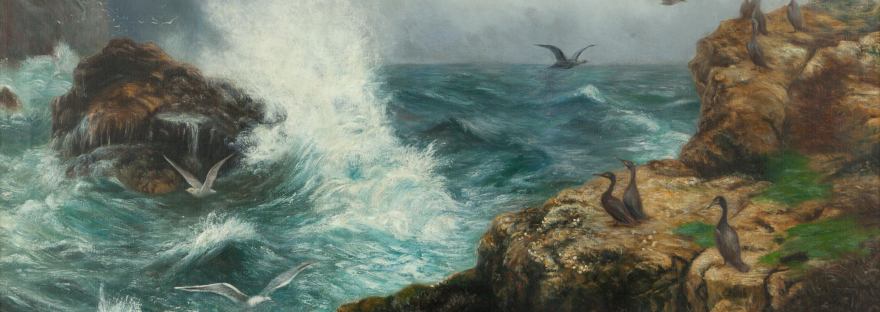
Image: Peter Graham (1836–1921), Cormorants of the Scottish Coast (Wikimedia Commons)
Thursday, 5 December 2024, 18:00-20:00 GMT/BST (online, ZOOM)
Facilitator: Steve Newman, Temple University
SPEAKERS:
Kate Hill, University of Lincoln: The home-made archive: women and DIY museums in twentieth-century Scotland
It is frequently asserted that archives are disciplinary formations, categorising people and controlling knowledge through their professional staff and structures. But what about archives that were not professional, structured or even conceived of as archives? I will discuss the material – documents, images and objects – collected by non-professional women who founded folk museums in Scotland; particularly Isabel Grant of the Highland Folk Museum and Barbara Fairweather of Glencoe Folk Museum. These archives, partial, haphazard and idiosyncratic, speak to the affective, embodied and place-based experiences of the past sought by these modern Scottish women, grounding their own, quite mobile, lives in a sense of rootedness.
Brianna E. Robertson-Kirkland, Royal Conservatoire of Scotland: No Man is an Island: Archival Finds and The Corri Family in Edinburgh
The Italian émigré, Domenico Corri (1746-1825), has long been depicted by musicologists and historians as a leading musical figure and entrepreneurial businessmen following his immigration to Edinburgh in 1771. A key secondary source for musicologists, Oxford Music Online, even states that he was invited to conduct the Edinburgh Musical Society concerts, that he ‘quickly established business enterprises’, and that ‘he started a music publishing business with his brother Natale in the name of his eldest son John (or Giovanni)’.[1] While he had multiple business ventures, recent archival evidence has shown that John was not his son but rather his brother, who worked in collaboration with him to publish Domenico’s first treatise before John (not Domenico) entered into a partnership with James Sutherland to establish the publishing house, Corri and Sutherland. Indeed, such inaccuracies have unfairly elevated Domenico’s status to leading musical figure above any of his other family members. The new archival evidence reveals that it was the family as a whole that worked together to establish the Corri name as respectable performers and publishers in Scotland’s capital.
This presentation will focus on two of Domenico’s family – his wife, Francesca (1750?-1802) and his brother, Giambattista otherwise known as John (1760?-1798), both of whom came with Domenico to Edinburgh in 1771. I will discuss what led to the misinformation surrounding these two figures and show archival evidence that proves they were just as active in Edinburgh’s musical community as Domenico. Such discoveries allow for a more nuanced and accurate understanding of both the Corri family and the professional musical performance and publishing world of eighteenth-century Edinburgh.
Craig Lamont, University of Glasgow: Allan Ramsay: an intensely local archive
The works of Allan Ramsay (1684–1758) are in large part a product of his professional and social life in Edinburgh, where he laid many foundations for the heyday of the Scottish Enlightenment. In this paper, we will see how Ramsay’s archives in Edinburgh have shaped the new Edinburgh Edition of his works (completed in 2024), and the extent to which his writing – in English and in Scots, in poetry and in prose – touches these crucial years of Scotland’s intellectual growth.
Nigel Leask, University of Glasgow, and Peadar Ó Muircheartaigh, University of Edinburgh:The MacNicol Papers: ‘From Lismore to Barbados’ and Beyond
This talk arises out of archival research for the AHRC funded project ‘From Lismore to Barbados’: The Gaelic Caribbean Travel Journal and Poetry of Dugald MacNicol, 1791-1844’. Initial research for the project was conducted remotely during the Covid Lockdown: key archival sources were the MacNicol Papers in the National Library of Scotland; Probate Court records in the National Archive at Kew; Army Lists; Barbados Archives Department (for information on his family life in the Caribbean); University College London’s Legacies of British Slavery Database. We also benefited greatly from contact with Barbadian genealogists during that period of research. Further Barbados archival research remains to be done during a planned research visit in 2025.
In this short talk we will focus on the transnational, colonial history of the MacNicol archive itself. Now preserved in the National Library of Scotland, much of the collection was compiled by Rev Donald MacNicol (1735–1802), but travelled with his sons to both the West, and East Indies during the 19th century where it was added to. The Gaelic folklorist John Francis Campbell, who was given access to the collection by Donald MacNicol’s grandson Ludovic Cameron in 1870, describes how his uncle, Dugald MacNicol ‘had the papers in the West Indies, and made some notes upon them … An elder brother of Dugald, who went to Calcutta and Australia, may have had some of his father’s papers … It is said that one of the family lost a portmanteau in the West Indies by the upsetting of a boat, and that he then lost some of the Gaelic manuscripts’. This talk will explore some of these adventures and misadventures, setting the surviving MacNicol papers in the NLS in dialogue with archives elsewhere.
The fourth World Congress of Scottish Literatures, hosted by the School of English at the University of Nottingham, will take place from Wednesday 3rd to Sunday 7th July 2024.
Both the School of English and the city of Nottingham enjoy a richly interlinked history with Scotland and Scottish writing. The School has particular specialist research in Older Scots, Romanticism, literary Modernism, and in the contemporary. Nottingham and its Midlands environs recur in the writing of Walter Scott; Byron’s ancestral home of Newstead Abbey lies just north of the city; J. M. Barrie earned a living writing for the Nottingham Journal; and the University holds the papers of Catherine Carswell. We even make an appearance in Trainspotting.
We hope that the Congress will be an opportunity to continue the mission of the International Association for the Study of Scottish Literatures, to bring together scholars from all over the world situate Scotland in a global and transnational scope. Hosting the Congress south of the border also offers us an opportunity to revisit the historical relationship between England and Scotland, and the effect that collaboration has had on the world. Nottingham, meanwhile, is indelibly marked by an outlaw imagination, and we are looking forward to a Congress held in that spirit.
Following the Environmental Scotland webinar organised by Carla Sassi (University of Verona) in September 2021, ‘Environmental Scotland II’ gathers various viewpoints and approaches toward a topic that has long been central in Scottish literatures. The invited panelists are Timothy C. Baker (University of Aberdeen), Léna Ferrié (University of Western Brittany), Peter Mackay (University of St Andrews) and Camille Manfredi (University of Western Brittany). Organised and chaired by Monika Szuba (University of Gdańsk), the webinar will take place on Monday 22 April 2024 at 5 pm CET.




 INTERNATIONAL ASSOCIATION FOR THE STUDY OF SCOTTISH LITERATURES